

Horse Cremation in The UK - A Complete Guide For Horse Owners
There is a particular kind of grief that comes with losing a horse. It is not the same as any other loss. The bond between a horse and their owner is forged differently - through early mornings, through years of trust built quietly, through the kind of partnership that asks something real of you both.
For many horse owners, their horse is not a pet in the conventional sense. They are a companion, a commitment, a relationship that has shaped who you are.
And yet when the time comes to say goodbye, many owners find themselves with very little guidance on what happens next.
Horse aftercare is rarely talked about openly, and the practical realities - the logistics, the costs, the decisions that need to be made quickly - can feel overwhelming on top of the grief.
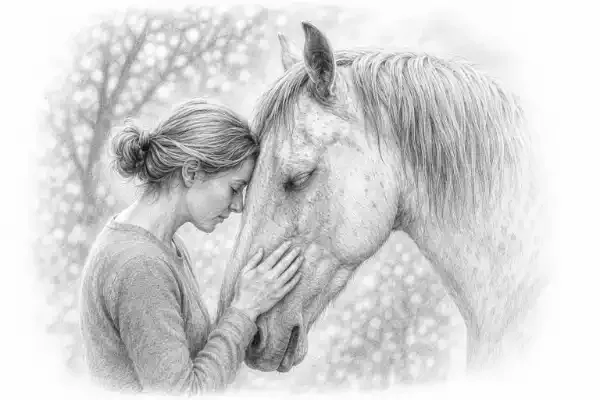
This guide is here to help you understand your options clearly and compassionately, so that when the time comes, you can make the right choice for your horse and for yourself.
Planning Ahead - Why It Matters More Than You Might Think
No one wants to think about losing their horse before they have to. But for many owners, having a plan in place before the time comes is one of the kindest things they can do - for their horse, and for themselves.
Horses often give us time. A diagnosis, a gradual decline, an ageing companion whose quality of life is beginning to change - these are moments when practical decisions can be made quietly, without the pressure of grief.
Researching equine cremation providers in your area, having a conversation with your vet about what the process looks like, and knowing who to call when the time comes can spare you from making urgent decisions at the worst possible moment.
It is also worth talking to your equine cremation provider in advance. Many welcome this conversation and will walk you through your options, their process, and their costs without any obligation. Knowing that everything is arranged can bring a quiet peace of mind during what is already a difficult time.
Why Horse Cremation is Different
Horse cremation is not simply a larger version of pet cremation. The scale is entirely different, and that affects everything - the process, the logistics, the costs, and the equipment required.
Horses typically weigh between 400kg and 600kg, with some breeds considerably heavier. This means standard pet cremation facilities cannot accommodate them.
Specialist equine cremation providers use purpose-built large-capacity crematoriums, and the entire process - from collection to the return of ashes - requires equipment and expertise that is specific to equines.
The good news is that there are dedicated equine cremation providers operating across the UK, many of them available around the clock, seven days a week. You do not have to face this alone, and you do not have to make rushed decisions without support.
What Happens in The Hours After a Horse Dies
Time matters more with a horse than with a smaller animal, and being prepared in advance can spare you from making urgent decisions in the depths of grief.
If your horse is put to sleep by a vet, your equine cremation provider can often be arranged in advance to arrive at the same time, or shortly after.
Many providers offer a 24-hour service and will travel any distance across the UK.
Once your provider arrives, they will handle the collection with care and professionalism.
Most reputable services use purpose-built transport that fully contains your horse throughout the journey, so they are not visible and are treated with complete dignity from the moment they are collected.
If your horse dies unexpectedly and outside of normal hours, contact your equine cremation provider as soon as you are able. They understand the urgency and the emotional weight of what you are going through, and they will guide you through the next steps.
It is also worth knowing that some equine cremation providers are licensed to carry out euthanasia themselves, as well as collection and cremation.
If your vet is unavailable or you would prefer a single provider to manage everything, it is worth asking when you make initial contact whether this is something they can offer.
This is not the right choice for everyone, but for some owners having one trusted person managing the whole process from beginning to end brings real comfort.
Your Options For Horse Cremation
When it comes to cremation, you will be asked to choose between two types of service. Understanding the difference before you need to make this decision can make it feel less overwhelming when the time comes.
Individual Cremation
Your horse is cremated alone, in their own cremation cycle. This is the option that allows you to have your horse's ashes returned to you.
If receiving the ashes matters to you - whether to scatter in a favourite place, keep as a memorial, or have made into a keepsake - individual cremation is the right choice. It is the more costly option, but for many owners it is the only one they would consider.
Communal cremation
Your horse may share the cremation chamber with other animals. Because the ashes are not separated during the process, they cannot be returned to you individually.
This is a more affordable option and is chosen by many owners when cost is a significant consideration, or when they feel at peace without receiving the ashes. There is no right or wrong answer here - what matters is that the choice feels right for you.
It is worth understanding that individual cremation means your horse is the only animal in the chamber for that cremation cycle.
This is what guarantees that the ashes returned to you are solely those of your horse. If receiving your horse's ashes matters to you, individual cremation is the only option that can offer that certainty.
Some providers also offer a third option sometimes described as a scatter service. This sits between individual and communal - your horse is cremated alone, but rather than the full ashes being returned to you, a token amount is returned and the remainder is scattered respectfully at the provider's site.
This can be a middle ground for owners who want the reassurance of individual cremation but do not wish to receive the full volume of ashes. It is worth asking your provider exactly what they offer and what their process involves so there are no surprises.
What The Cremation Process Involves
Knowing what happens can bring some comfort, even if it is hard to read.
Once your horse arrives at the cremation facility, they are handled with care throughout the entire process. Special large-animal equipment is used that accommodates a horses size requirements.
The process itself takes considerably longer than a standard pet cremation given the size involved, and providers will be able to give you an indication of timescales when you speak to them.
For individual cremations, the ashes are carefully collected, prepared, and presented in a container or casket of your choosing.
Many providers offer a range of options, from simple scatter tubes to engraved wooden caskets.
Some will also offer meaningful keepsakes such as a plait of your horse's mane or tail hair alongside the ashes.
This detail really matters deeply to many owners and is worth asking about. A certificate of cremation is typically provided with individual services, confirming that your horse has been cremated individually and that the ashes you receive are theirs alone.
What Does Horse Cremation Cost in The UK?
Costs vary depending on several factors, and it is worth understanding what influences the price so you can plan ahead if possible.
The type of cremation makes the biggest difference. Individual cremation, where ashes are returned, is the more expensive option. Where as Communal cremation, without ashes returned, is more affordable.
The size and weight of your horse affects the cost. Larger, heavier horses cost more to cremate than smaller breeds or ponies.
Distance for collection is often charged separately. Many providers include collection within a certain radius and charge per mile beyond that, so your location relative to the provider will affect the overall cost.
As a General Guide, What To Expect
Communal cremation - from approximately £300 to £700, depending on size and location. Individual cremation with ashes returned - from approximately £480 to over £1,000, again depending on size, distance, and any additional keepsakes.
These figures are a guide only. Always ask your provider for a clear, itemised quote before agreeing to a service, and don't be afraid to ask what is and isn't included.
If cost is a concern, it is worth speaking honestly with your provider. Some offer payment plans or can advise on the most affordable options available to you. You should never feel that financial pressure means your horse cannot be treated with dignity.
What to Do With Your Horse's Ashes
Receiving the ashes of a horse you have loved for years is a profound moment. There is no single right thing to do with them, and many owners find that the decision takes time.
Some owners choose to scatter the ashes in a place that was meaningful to their horse - a favourite field, a beloved hack route, a spot where they spent peaceful time together.
Others keep the ashes in an engraved casket or urn at home, as a permanent and visible memorial. Horse ashes can also be incorporated into memorial keepsakes - there are specialist jewellers and artists who work with pet ashes to create rings, pendants, glass artwork, and other meaningful objects.
Given the volume of ashes a horse produces, there is often enough to create multiple keepsakes and still have ashes remaining.
Some owners choose to bury the ashes in a garden, either alone or alongside a planted tree or memorial garden feature. Unlike burying a horse's body, burying ashes carries no legal restrictions and can be done wherever feels right.
Mane And Tail Hair - A Keepsake Worth Keeping
One detail that many owners don't think to ask about until it is too late is requesting a lock of mane or tail hair before or at the time of collection.
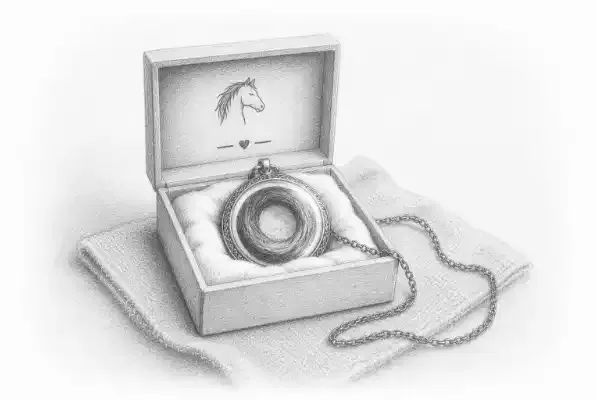
Many equine cremation providers will offer this as part of their service, either plaited and tied or preserved alongside the ashes.
If this matters to you, mention it to your provider when you make the initial call. It is a small thing to ask... but a comfort that lasts a lifetime.
How to Choose an Equine Cremation Provider
Not all providers are equal, and choosing the right one matters. Here are the things worth asking when you make contact.
Are you available 24 hours a day, 7 days a week? Horses don't pass at convenient times, and you need to know your provider will be there when you need them.
Do you offer both individual and communal cremation? Understanding both options gives you genuine choice. Ask specifically about collection distance, caskets, and any certificates or keepsakes.
Do you have purpose-built equine transport? Your horse should be fully enclosed and treated with dignity throughout the journey.
Will my horse be cremated individually if I choose that option? A reputable provider will be able to confirm their process clearly and without hesitation.
Can I have mane or tail hair preserved? Ask this early so it can be arranged in advance.
Trust your instincts. A provider who answers your questions with patience and warmth, who understands that you are grieving and not just a customer, is happy to go through all these questions and is worth finding.
Burial As An Alternative
While this guide focuses on cremation, it is worth knowing that burial on private land is an option for horse owners in England, though it is subject to regulations that must be followed carefully.
In England, a horse may be buried on private land - whether they were a pet or not - provided the burial site is at least 250 metres from a watercourse and 50 metres from a well or borehole.
The burial must be deep enough to prevent scavenging. In Scotland, Wales, and Northern Ireland, burial is permitted only for horses kept as pets.

Permission from your local authority is not always required, but it is strongly advisable to seek guidance from your local animal health office before proceeding, as requirements can vary. The process can take time to arrange, so it is not always a practical option in the immediate aftermath of loss.
For many owners, the practical challenges of horse burial - the land required, the machinery needed, the regulations involved - make cremation the more manageable choice.
If you would like to understand all of the options available to you when a horse dies, including burial, fallen stock, and green alternatives, we have covered these in full in our companion guide - Horse End of Life Options in the UK - A Complete Guide to Your Choices.
Questions Horse Owners May Want To Ask...
How long does horse cremation take?
The cremation process itself takes considerably longer than for a smaller animal, typically several hours, due to the size involved.
Collection times vary depending on your location and the provider's availability. Many providers will give you an estimated timescale when you make initial contact, and for individual cremations will let you know when to expect the ashes to be returned.
Can I be present when my horse is collected?
Yes, in most cases. Many owners choose to be present for the collection, and reputable providers will handle this moment with complete sensitivity and care.
If you would like to say a final goodbye before your horse is taken, let your provider know when you call - they will do everything they can to give you the time and space you need.
Can I travel with my horse to the cremation facility?
Some providers will allow this, though it is not standard practice. If this matters to you, it is worth asking when you make contact. Not all facilities are set up to accommodate owners on site, but some will make arrangements where possible.
How much ash will I receive from a horse?
Considerably more than you might expect from a smaller animal. A horse can produce several kilograms of ash after cremation.
This means there is often enough to scatter in a meaningful place, keep in a casket at home, and still have some remaining for a keepsake piece of memorial jewellery or artwork if you choose.
Do I need to do anything before the provider arrives?
Your provider will guide you through this when you call. In most cases they will simply need safe and clear access to where your horse is. If your horse has been stabled, let them know.
If they are in a field, think about gate access and whether the ground is manageable for a vehicle. Your provider will ask the questions they need to - you do not need to have everything figured out before you pick up the phone.
You Are Not Alone in This
Losing a horse is a profound loss, and the grief that follows is real and valid. It does not matter that some people don't understand why.
The people who have stood in a field on a cold morning, who have learned the particular rhythm of a horse they love, who have felt what it is to be trusted by an animal that large and that sensitive - they understand.
If you are struggling in the weeks and months after losing your horse, please know that bereavement support exists specifically for pet and animal loss. Our Pet Loss Resources page has details of organisations and counsellors who can help.
Other Guides You May Find Helpful
Pet Cremation Cost Calculator UK
Pet Cremation Costs What To Expect
Helping Children Cope With Pet Loss
What To Do When A Pet Dies (Quick Guide)
Pet Memorials, Remembrance And Keepsakes
Choosing A Pet Cremation Provider in The UK
How Pet Cremation Works In The UK (Step By Step Guide)
What To Do Next If Your Pet Has Just Died - Complete Guide
Coping With Pet Loss - How Long Does Grief Last and How To Heal
How to Know When It's Time - A Guide to Your Pet's Quality of Life
Need To Find A Pet Crematorium Near You?
If you have recently lost a pet and need to find a pet cremation service, Pet Loss Aftercare can help during this difficult time.
When you feel ready, you can browse pet cremation and aftercare providers by location to see what services are available in your area.
Pet Cremation Providers In England
- Bedfordshire
- Berkshire
- Bristol
- Buckinghamshire
- Cambridgeshire
- Cheshire
- Cornwall
- Cumbria
- Derbyshire
- Devon
- Dorset
- Durham
- East Riding of Yorkshire
- East Sussex
- Essex
- Gloucestershire
- Greater London
- Greater Manchester
- Hampshire
- Herefordshire
- Hertfordshire
- Isle of Wight
- Kent
- Lancashire
- Leicestershire
- Lincolnshire
- Merseyside
- Norfolk
- North Yorkshire
- Northamptonshire
- Northumberland
- Nottinghamshire
- Oxfordshire
- Rutland
- Shropshire
- Staffordshire
- Somerset
- South Yorkshire
- Suffolk
- Surrey
- Tyne and Wear
- Warwickshire
- West Midlands
- West Sussex
- West Yorkshire
- Wiltshire
- Worcestershire
Pet Cremation Providers In Scotland
Pet Cremation Providers In Wales
Pet Cremation Providers In Northern Ireland
Do you provide pet cremation services in the UK?
Pet Loss Aftercare - a resource created by pet owners, for pet owners 💛
Found this page helpful?





Created with ©systeme.io